AI for science, built by a scientist.

I understand complicated systems, find the real problem, and build things.

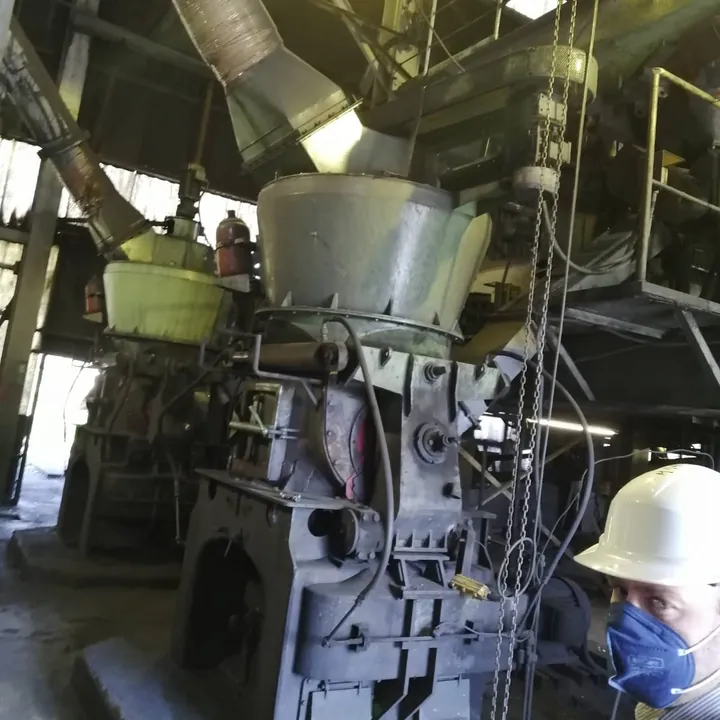
PhD chemist. Three years inside pharmaceutical and industrial labs, installing instruments and building QC facilities. Since 2024, building AI agents and spatial software for the people who work there.

Thessaloniki, GreeceBuilding Varlis · Alepou

Featured01 / 02
Inside Big Lab, recorded

A laboratory, built by talking

Big Lab

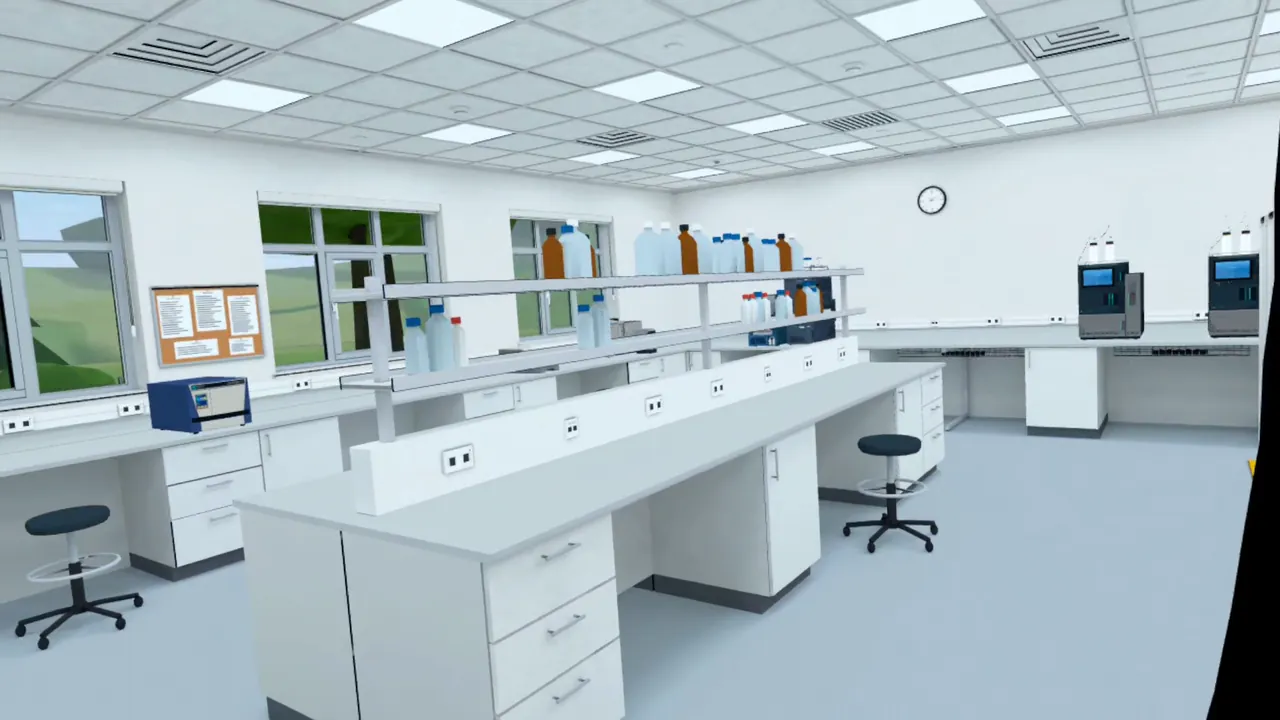
A walk-through laboratory, made in Alepou Spatial by talking to an AI. You can step inside while it’s being built, and someone else can join from their own wearable. It runs on the same client as every other experience here.

Fields
AI · Science · Spatial
Wearable
One client app
Availability
Coming soon
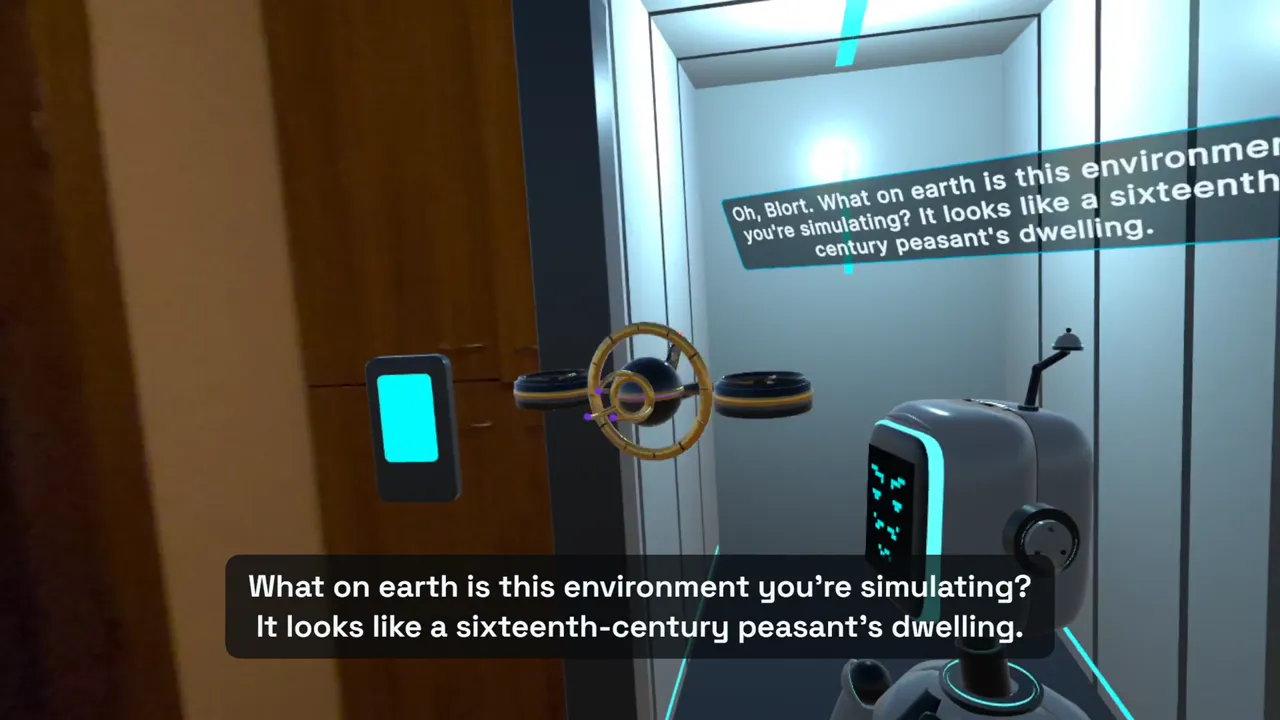
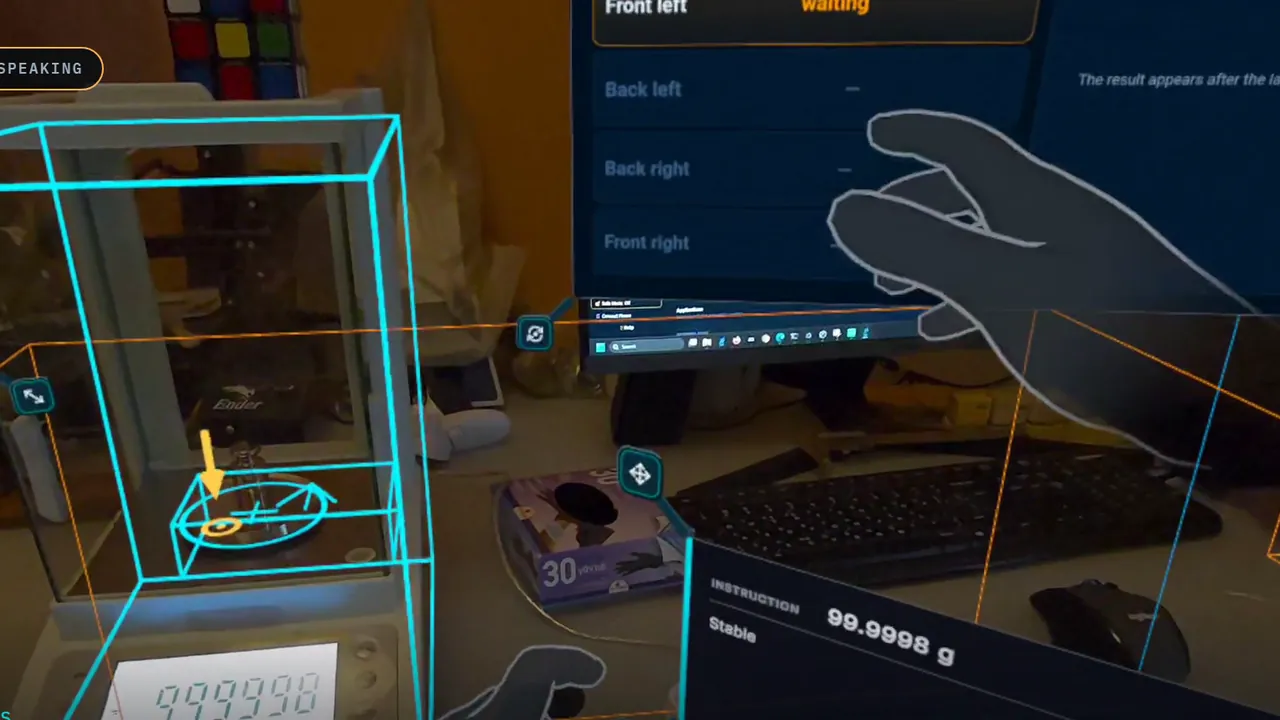
Built by asking: the balance test, recorded at 1:34

AI for science in mixed reality

Alepou

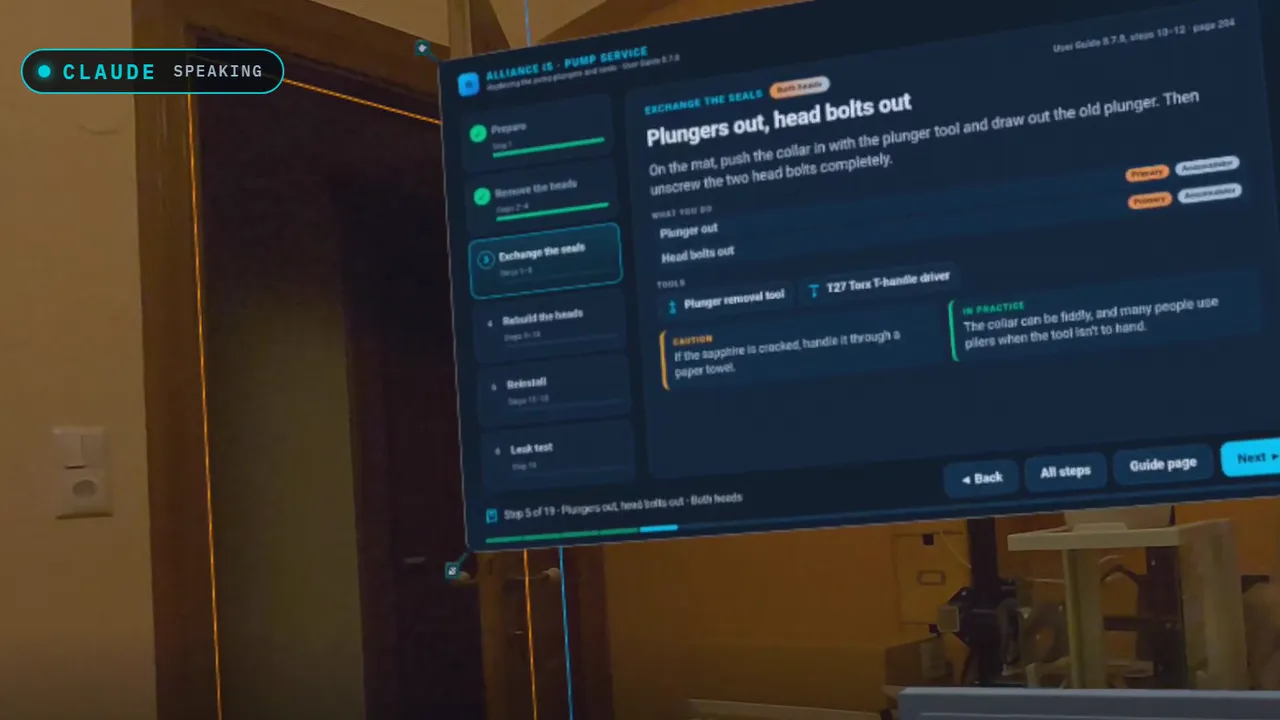
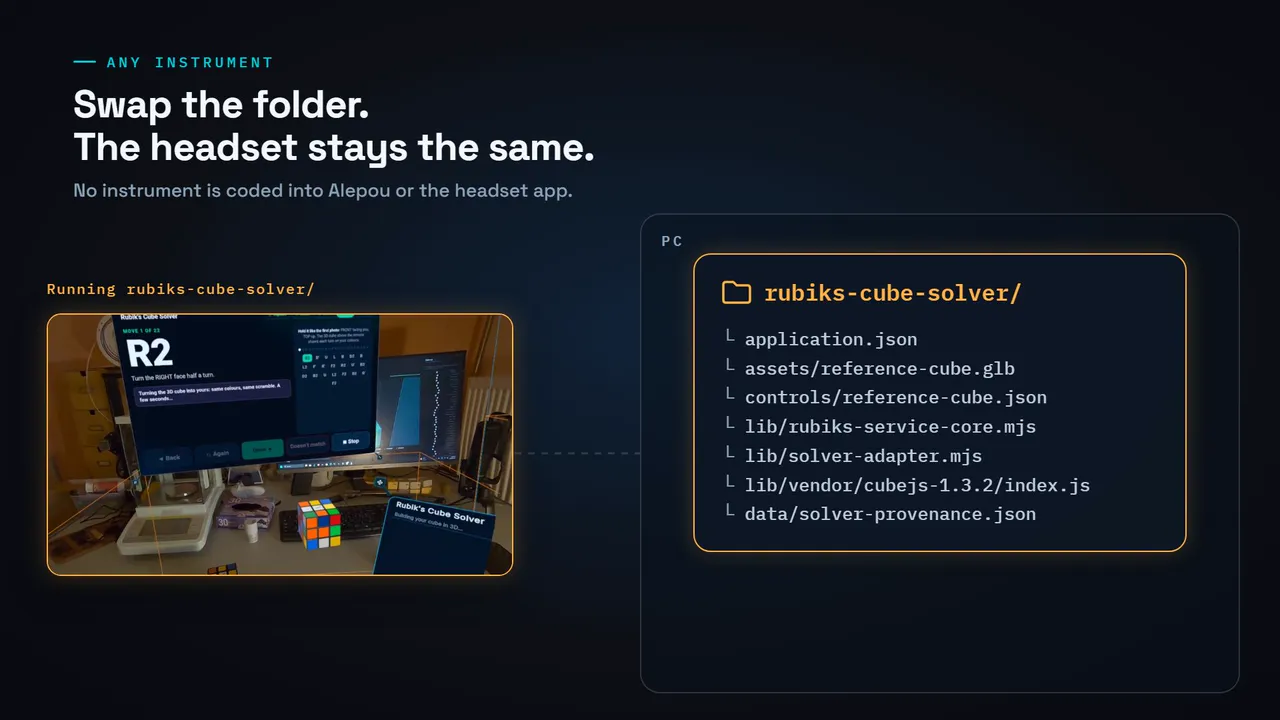
Ask for a lab procedure and an AI builds it, straight onto your headset. A balance test where the computer reads the instrument itself is recorded; an HPLC pump service is in progress. Nothing in the headset app is specific to either: the same client solved a Rubik’s cube.

Fields
AI · Science · Spatial
Headset
One client app, never rebuilt
Availability
Coming soon
Projects

Alepou

Spatial AI in the Lab

Spatial AI at the bench

Watch on YouTube

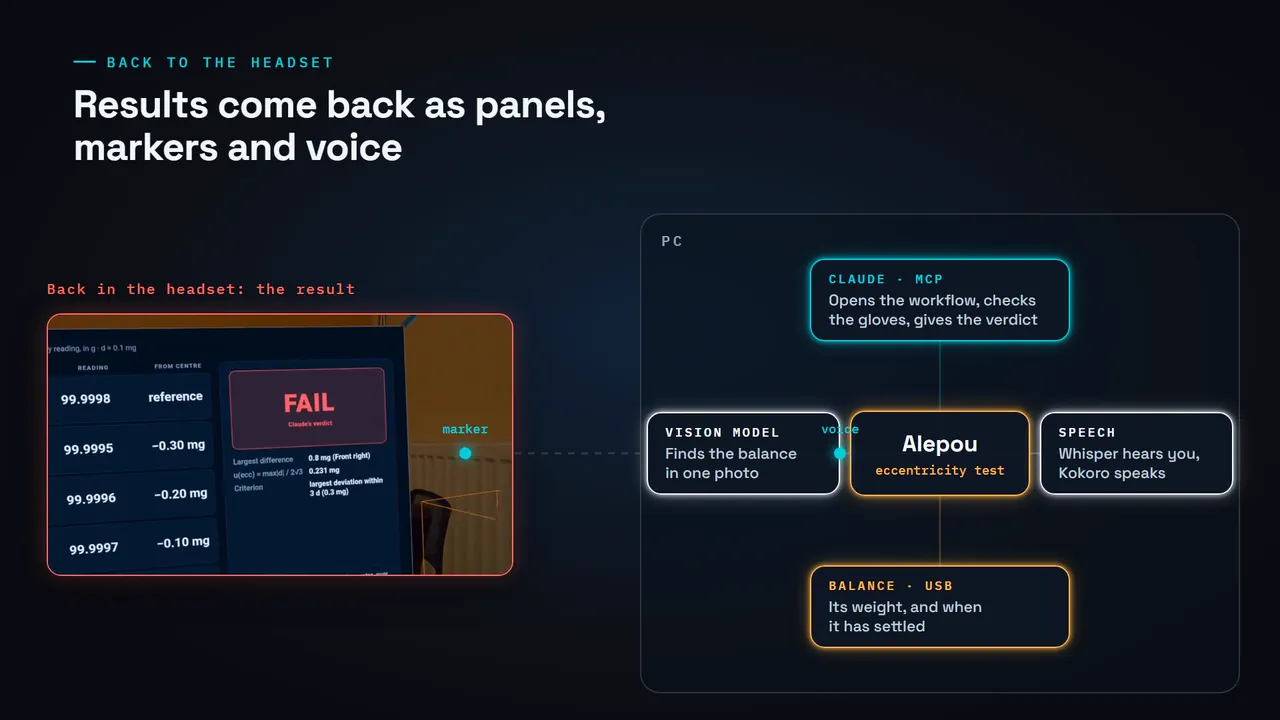
A guided eccentricity test on a real analytical balance, run in a headset with Alepou. The computer reads the balance itself over its serial port, and Claude checks the operator’s gloves and the final verdict.

Spatial AI in the Lab: a balance eccentricity test guided by Claude in a headset
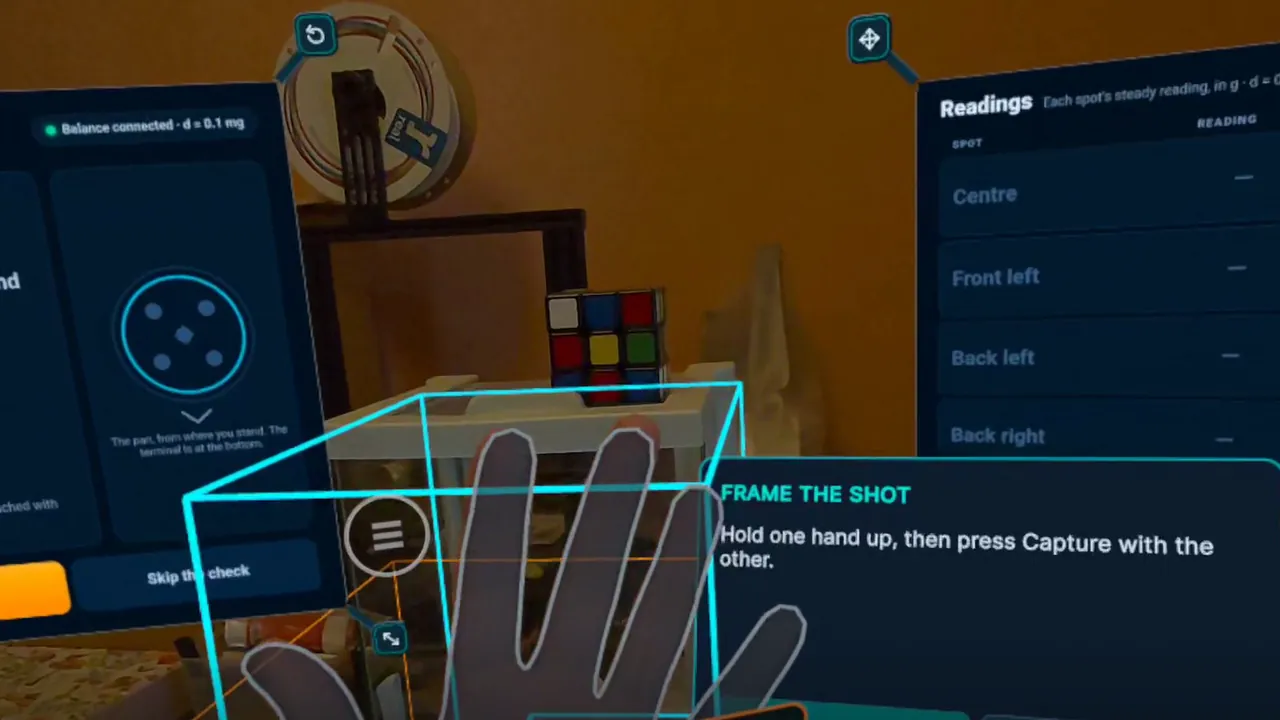
Glove check: one photo of a hand
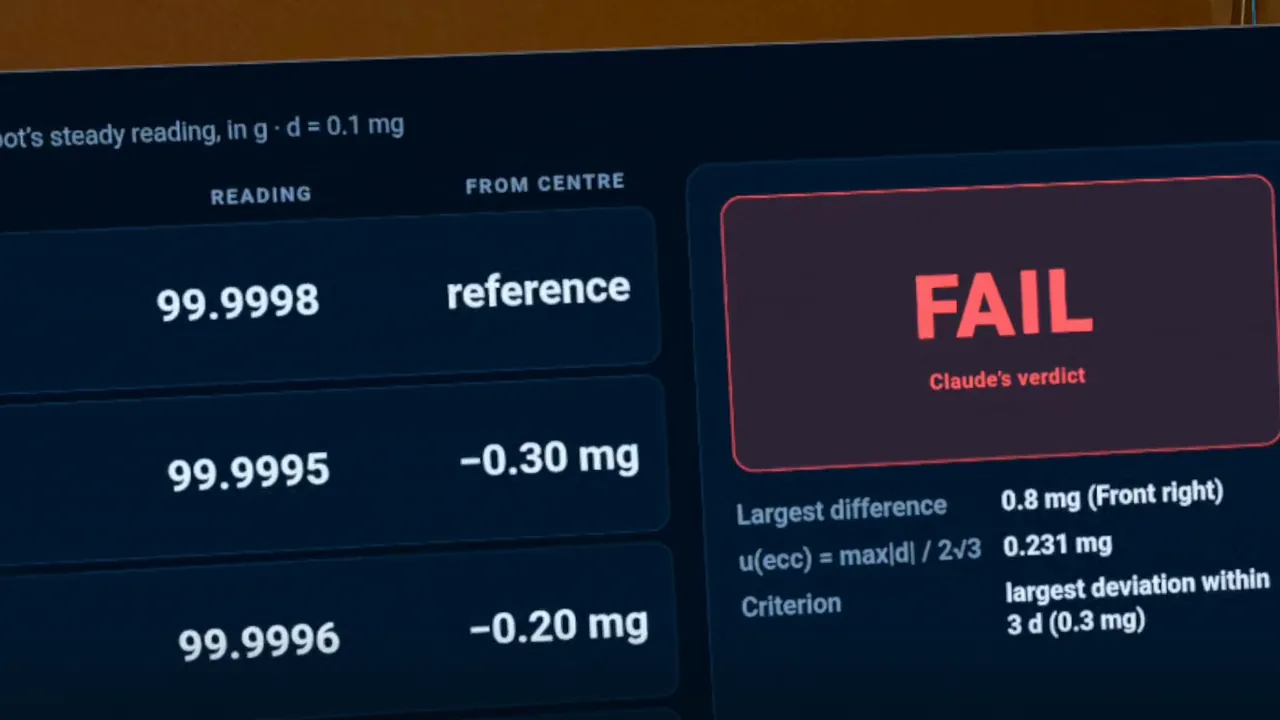
The readings and Claude’s verdict
How it works: the headset is a client, the work runs on the PC
Asked for a part number the guide doesn’t give, Claude won’t guess one

Eval: can Claude find out why a balance won’t settle?

In a lab, the reading that won’t settle is an everyday problem, and the cause is usually at the bench: a door left open, a hand in the chamber, a warm sample, a pump nobody notices. I built an eval for the part of this demo where a model has to earn its place: Claude, as the assistant in the headset, talking with the person to find the cause and say what to do.

Every scenario is also played by the manufacturers’ troubleshooting checklist written as code, so the eval shows where a checklist is enough and where Claude has to reason. I wrote the answer keys, added the causes no chart lists from my service work, and label the conversations blind.

scenarios behind one complaint
15
Claude models and a checklist baseline
3 + 1
expert labels decide right and wrong
Blind

How it works

  1. 1AskOne spoken request. Alepou asks before it starts anything on the PC, then starts the test’s workflow.
  2. 2FindOne photo of the balance. A vision model on the PC finds it and lands the outline on the pan.
  3. 3CheckOne photo of a hand. Claude holds the test until both hands are in nitrile gloves.
  4. 4WeighThe centre, then the four quarters of the pan. Each reading is taken by itself, once the balance is stable.
  5. 5DecideThe workflow works out the result against the limit. Claude checks the working and gives its own verdict.

What the film shows

The test is one continuous take with a 100 g weight, edited for pace. The balance failed: front right read 0.8 mg below the centre, against a limit set strict on purpose at 0.3 mg, three times the readability. USP <1251> would allow 50 mg at this load.

From 2:53 the film shows how it works: what the headset does and what runs on the PC. Then a second take: asked for a part number that an HPLC pump’s guide doesn’t give, Claude says so and won’t guess one.

Alepou

Spatial Agents

Agentic spatial AI

Demo page

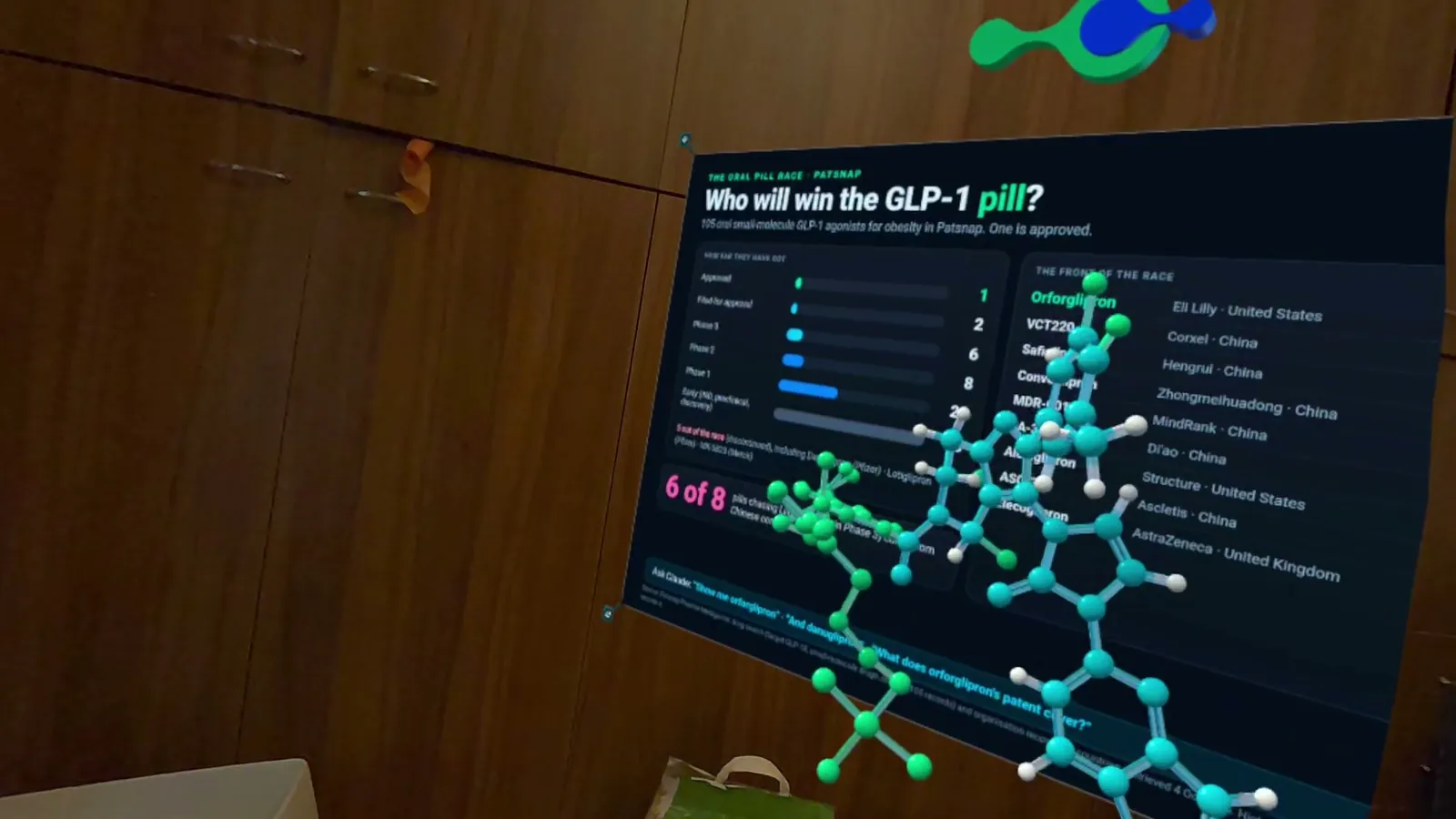
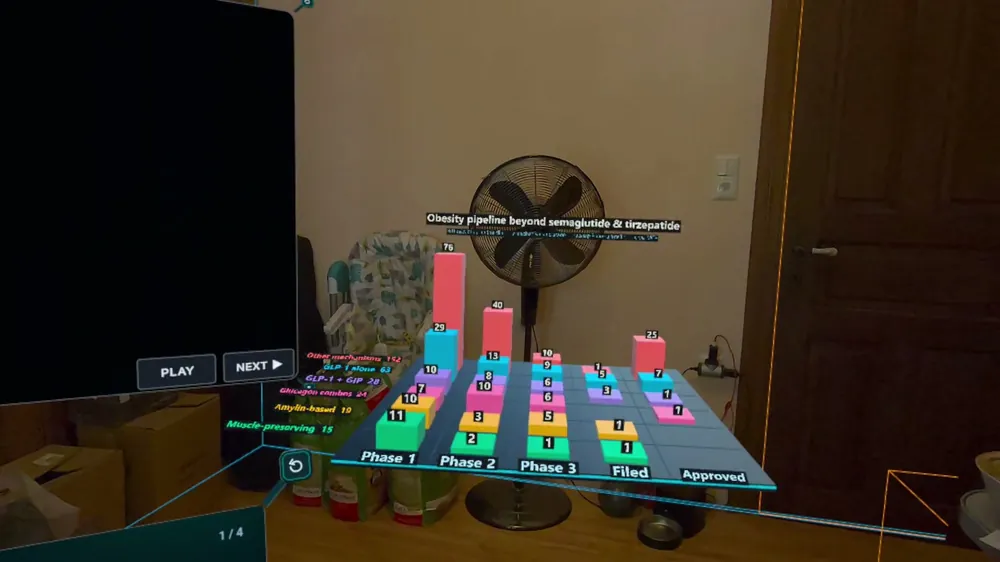
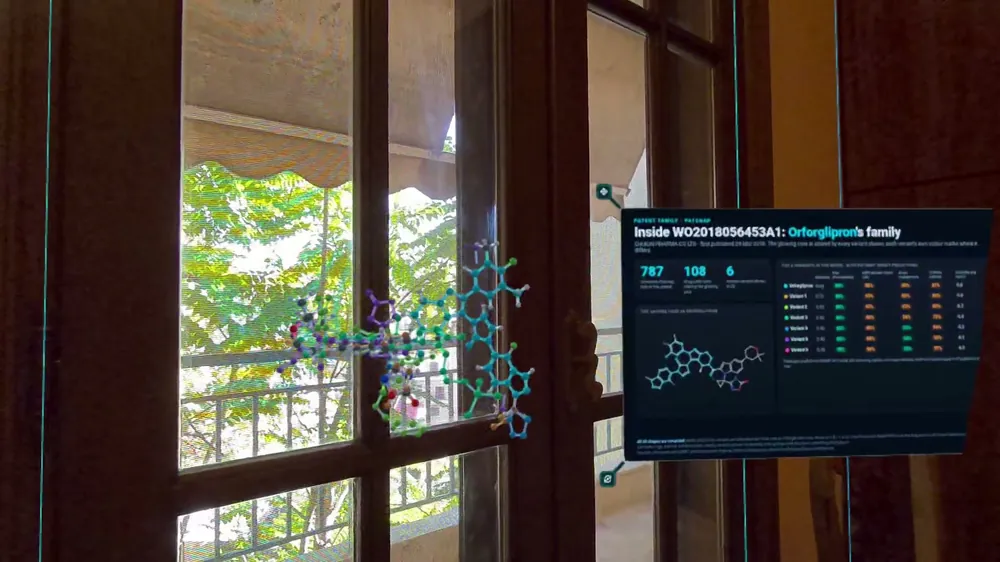
Ask a question out loud in the headset, and an AI agent queries enterprise life-science data and puts the answers in the room: a drug-pipeline chart, 3D molecules, a patent family. This was the first public demo of Alepou’s spatial mode.

Spatial Agents: the recorded headset demo
The obesity pipeline as a 3D chart
Patent family WO2018056453A1

How it works

  1. 1AskA spoken request in the headset reaches an AI agent working inside an Alepou project on the PC.
  2. 2QueryThe agent calls the provider’s MCP servers: drug, deal and patent intelligence, plus chemical structures and ADMET predictions.
  3. 3BuildProject tools turn the answers into pages, charts and 3D molecules. Every call, file and change is recorded in the project.
  4. 4PlaceAlepou checks each file and places it in the room. The headset simply shows it.

What the film shows

One take in the headset, about six minutes, lightly edited for pace. An independent demonstration on a commercial provider’s public life-science tools, not affiliated with or endorsed by the provider.

Alepou

Rubik’s Cube Solver

Built by asking

Watch on YouTube

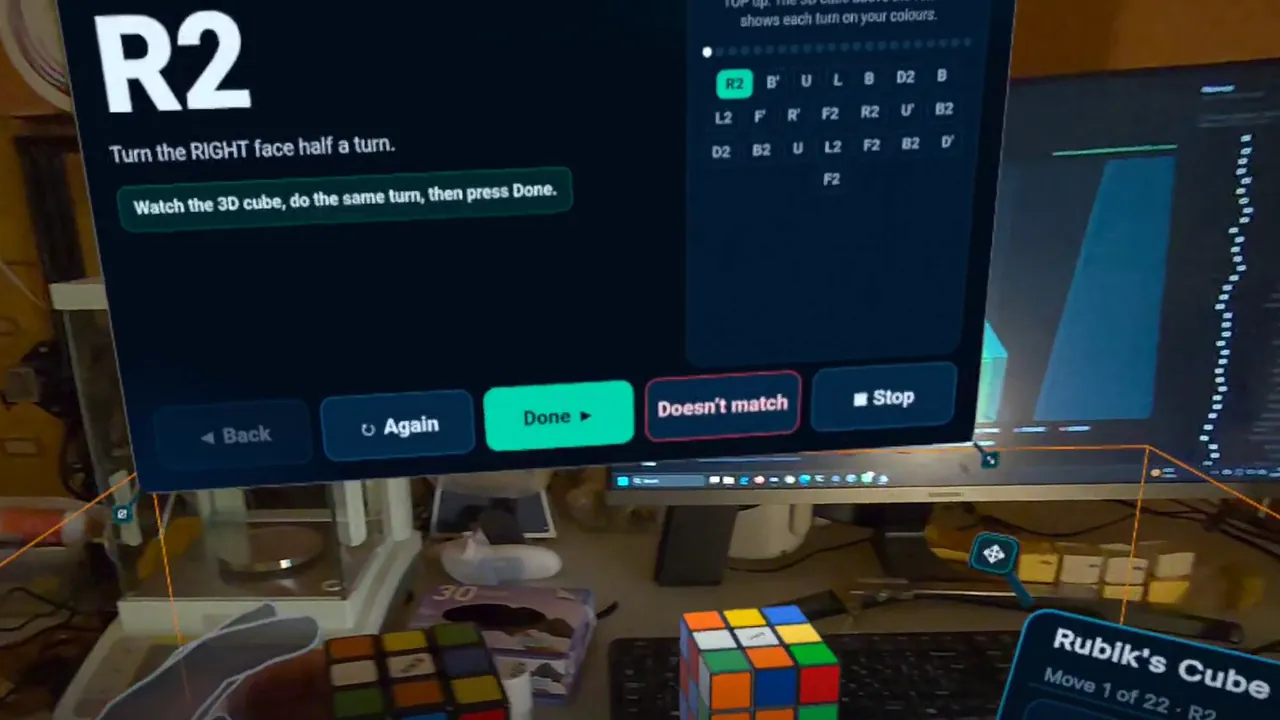
One spoken request, and the headset reads a real, scrambled cube from six photos, then guides it to solved one move at a time. The headset app has no cube in it: the workflow, its panels and the 3D cube were made by asking an AI.

Spatial AI, built by asking: a Rubik’s cube solved in a headset
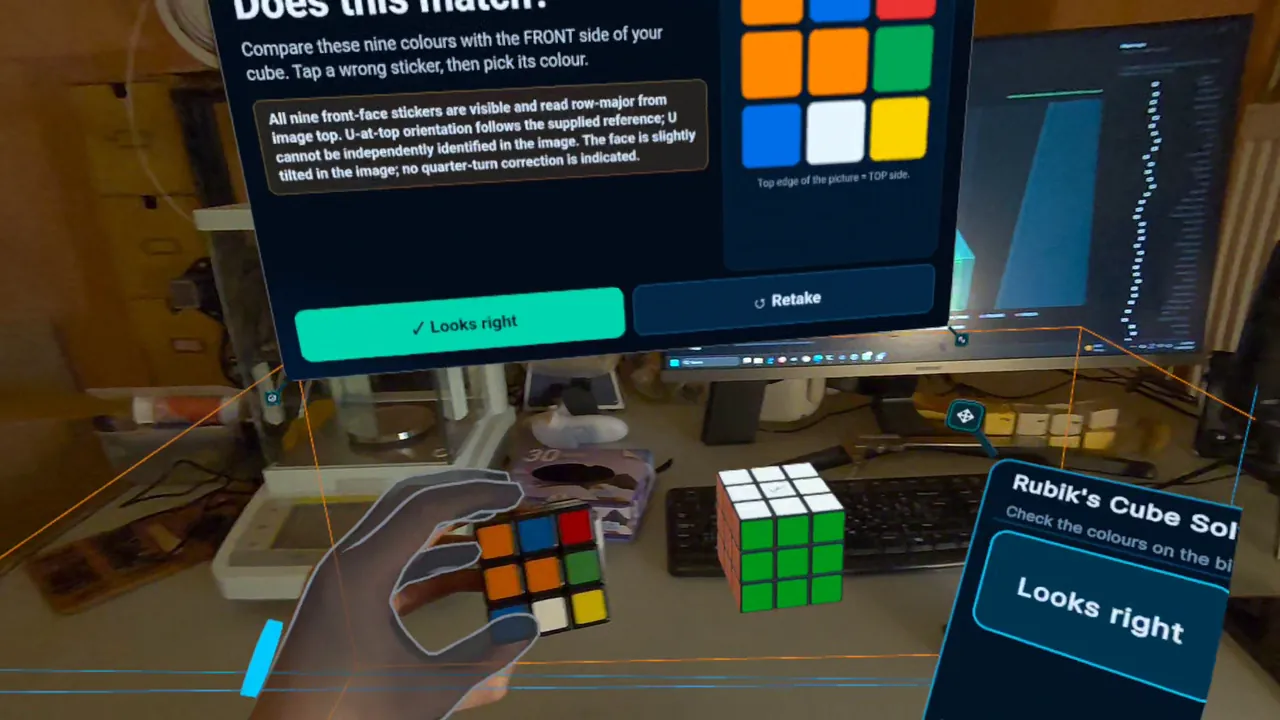
Each face checked: Looks right, or fix a sticker
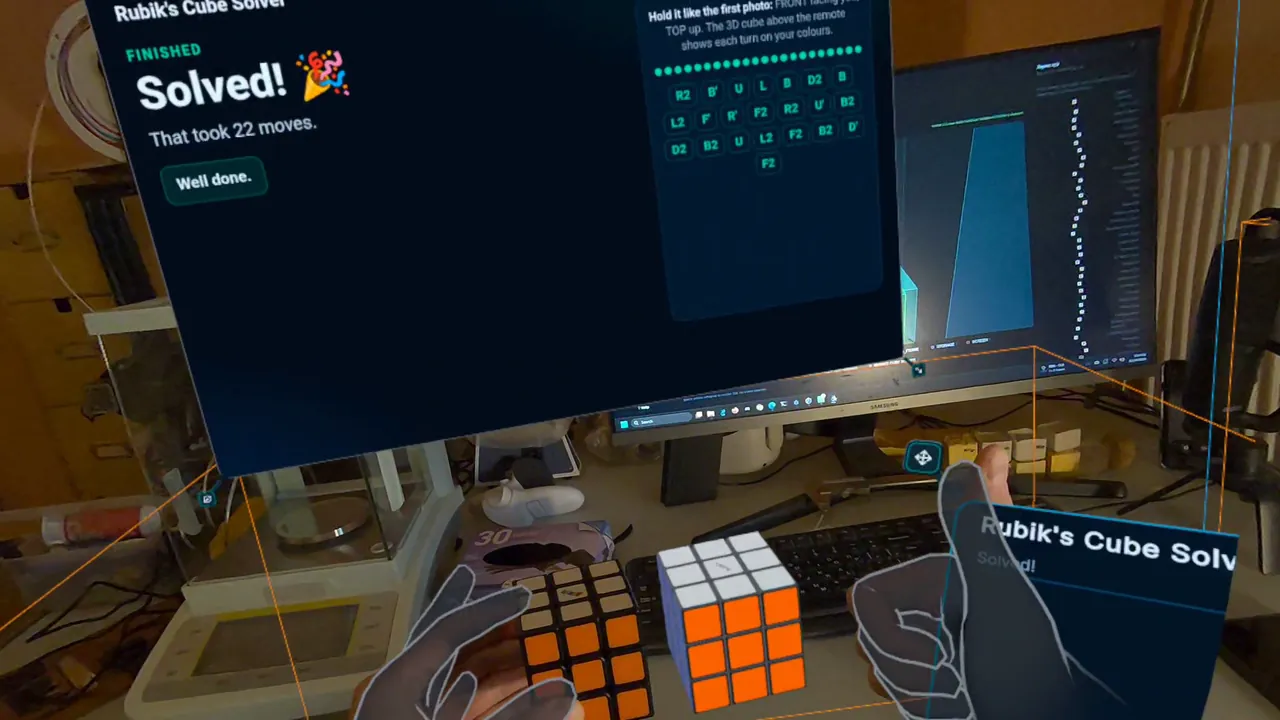
Solved in 22 moves

How it works

  1. 1AskOne spoken request. Claude opens the cube solver.
  2. 2PhotoOne photo per face. An AI reads its nine stickers; you check each face or tap a sticker to fix it.
  3. 3SolveThe cube is checked as real and solvable, and a solver on the PC finds 22 moves.
  4. 4TurnEach move plays on the 3D cube. Do the same turn, then press Done.

What the film shows

Edited for length from one continuous take on a Meta Quest 3. The cube model, its moves and the panels come from the workflow at run time; the headset app is the same one that ran the balance test.

Alepou

Go against KataGo

Built by asking

Watch on YouTube

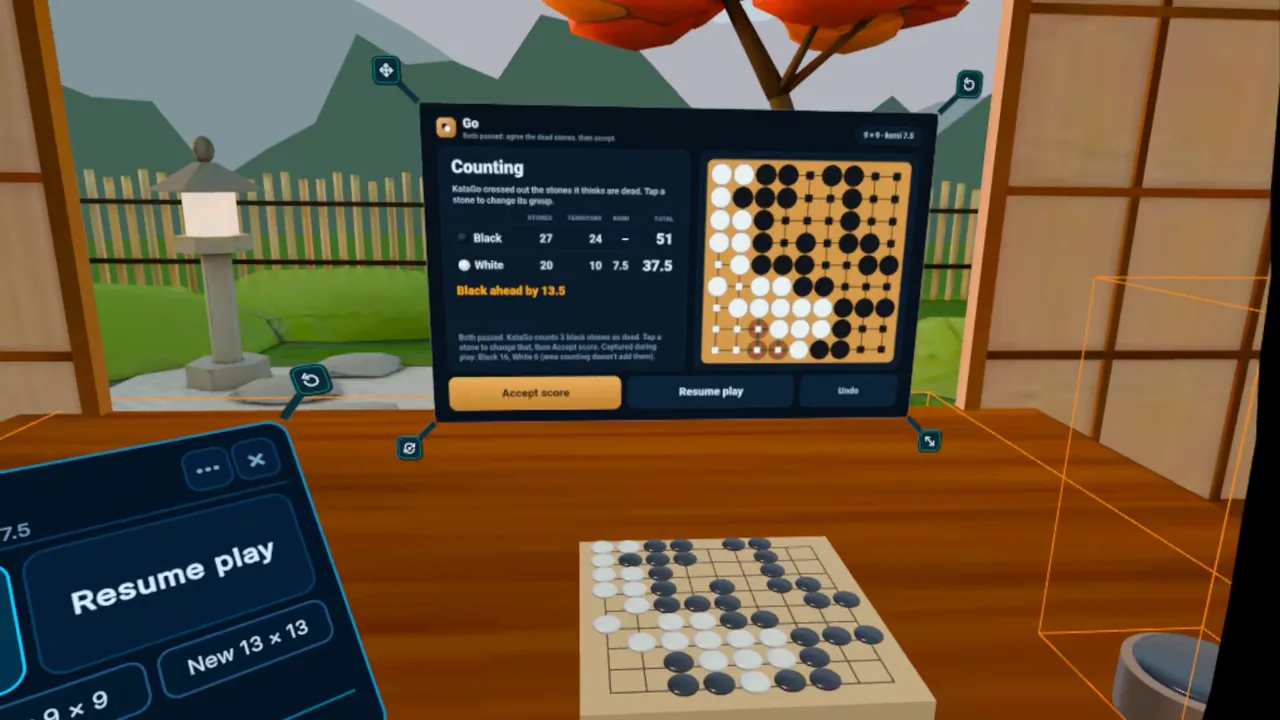
One spoken request, and Claude opens a 9 × 9 Go board and a tea room an AI built. Then three games against KataGo on the PC, playing like a 5 kyu human. The headset app knows nothing about Go: the board, the stones, the rules and the panel come from a Go app built by AI agents in Alepou.

Spatial AI at the Go board: three games against KataGo in a headset
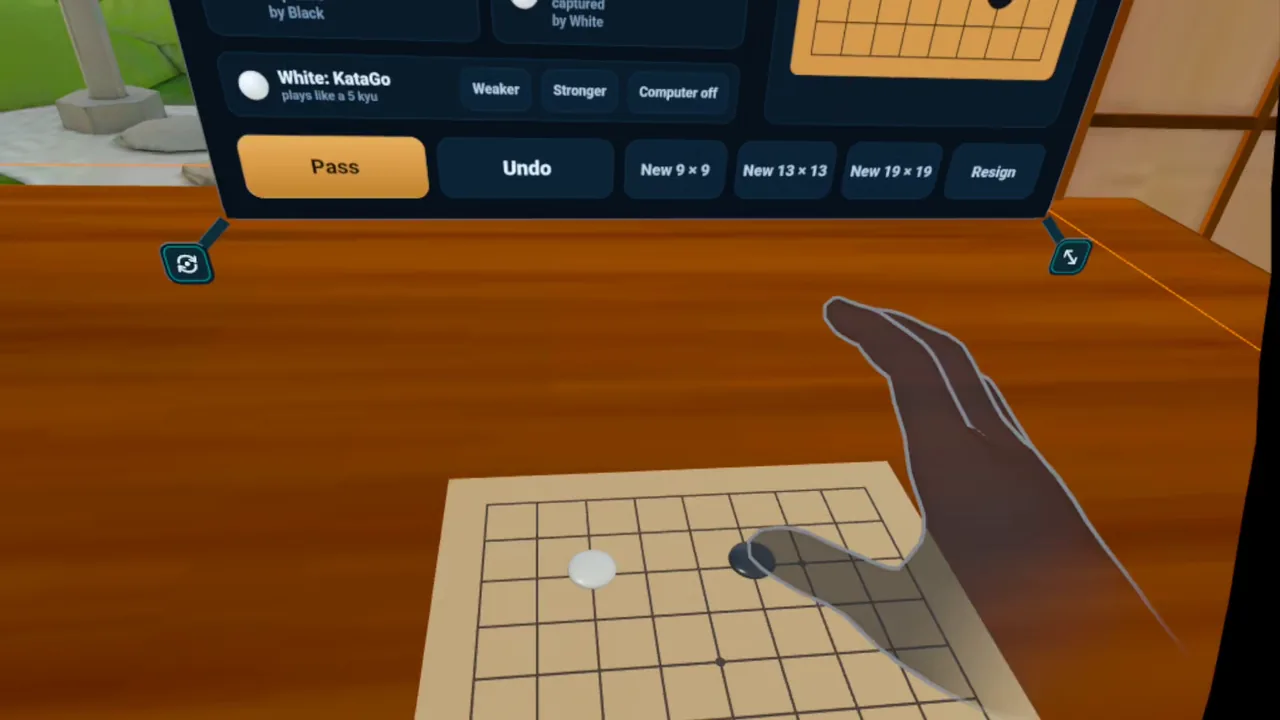
Pinch a stone from the bowl, drop it on a point
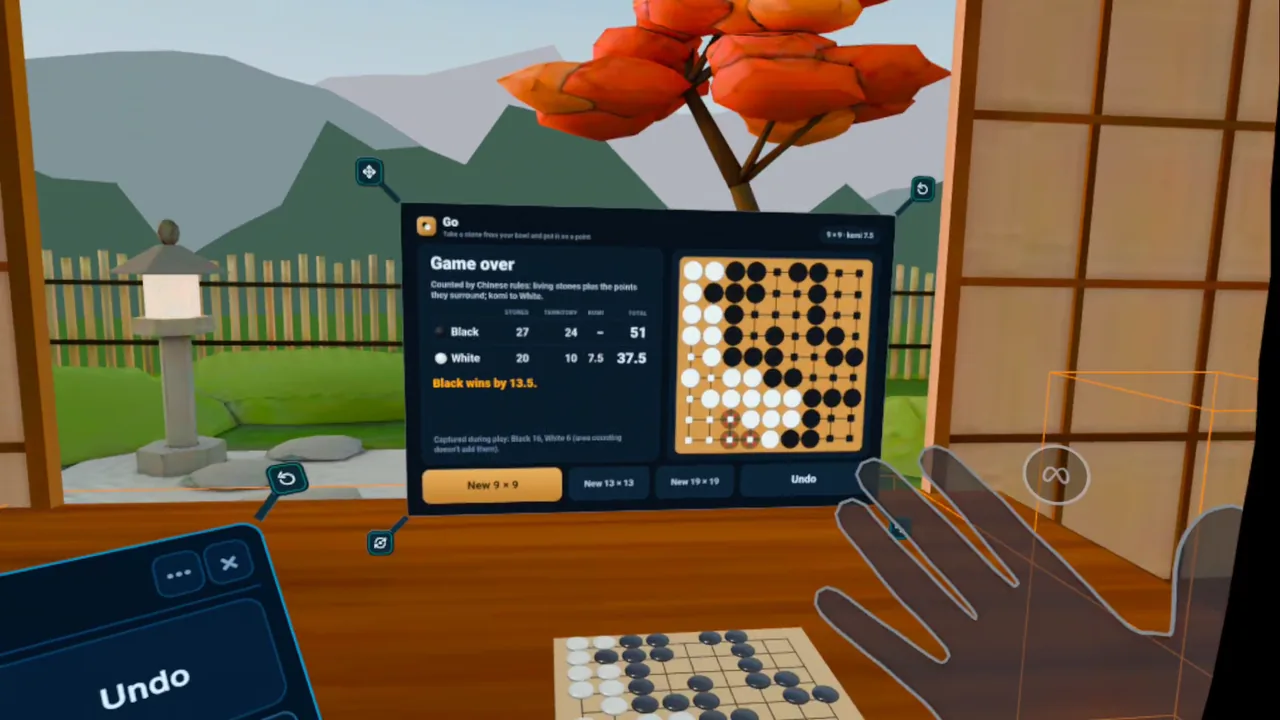
Game 3: Black wins by 13.5

How it works

  1. 1AskOne spoken request. Claude opens the Go app and the tea room.
  2. 2PlayPinch a stone from the bowl and drop it on a point. KataGo’s answer lands on the board, and the panel shows its estimate of who is ahead.
  3. 3CountTwo passes start the count. KataGo marks the stones it thinks are dead; the app scores stones plus territory, with 7.5 komi to White.

What the film shows

Edited for length from one continuous take on a Meta Quest 3; each game runs fast under a speed badge. Game 1 ends in a resignation, game 2 is lost by half a point at the count, and game 3 is won by 13.5 after Black D9 captures 13 stones.

The moves come from KataGo’s human-style network on the PC’s GPU, set to 5 kyu. The rules, the count and the spoken lines come from the Go app; the headset app is the same one that ran the balance test.

Alepou

Digital twin of a room

Built by asking

Watch on YouTube

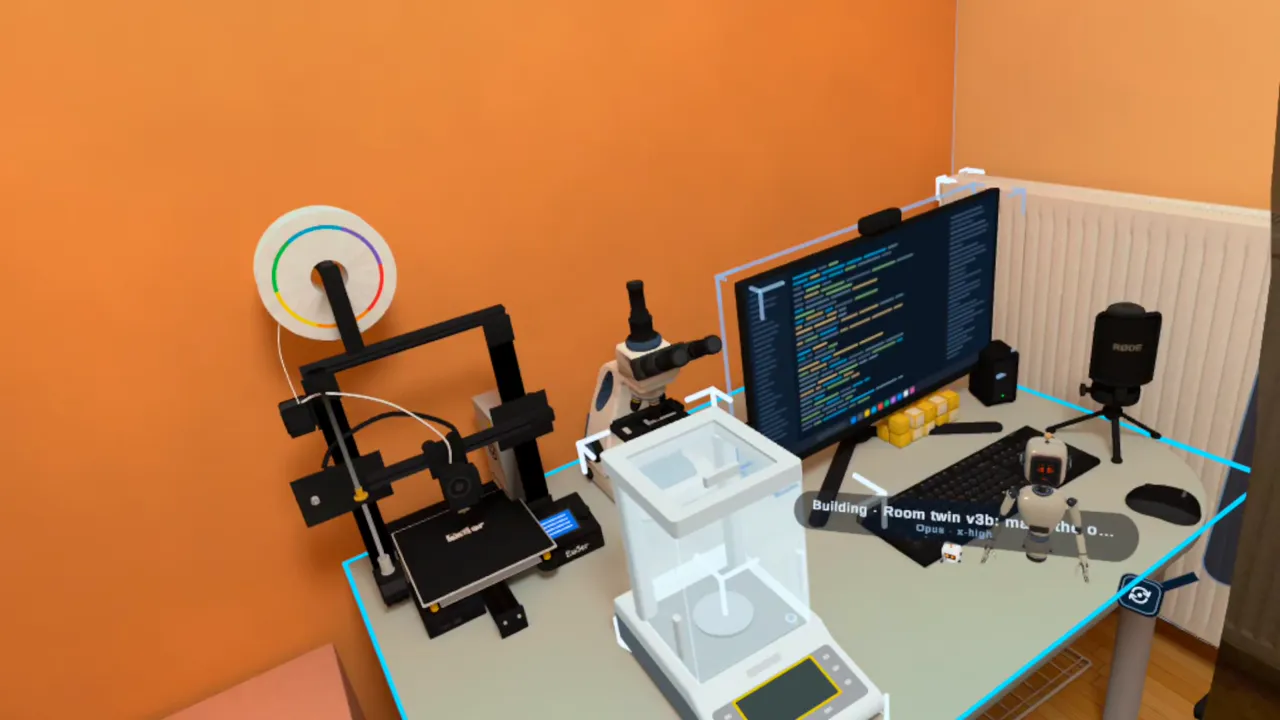
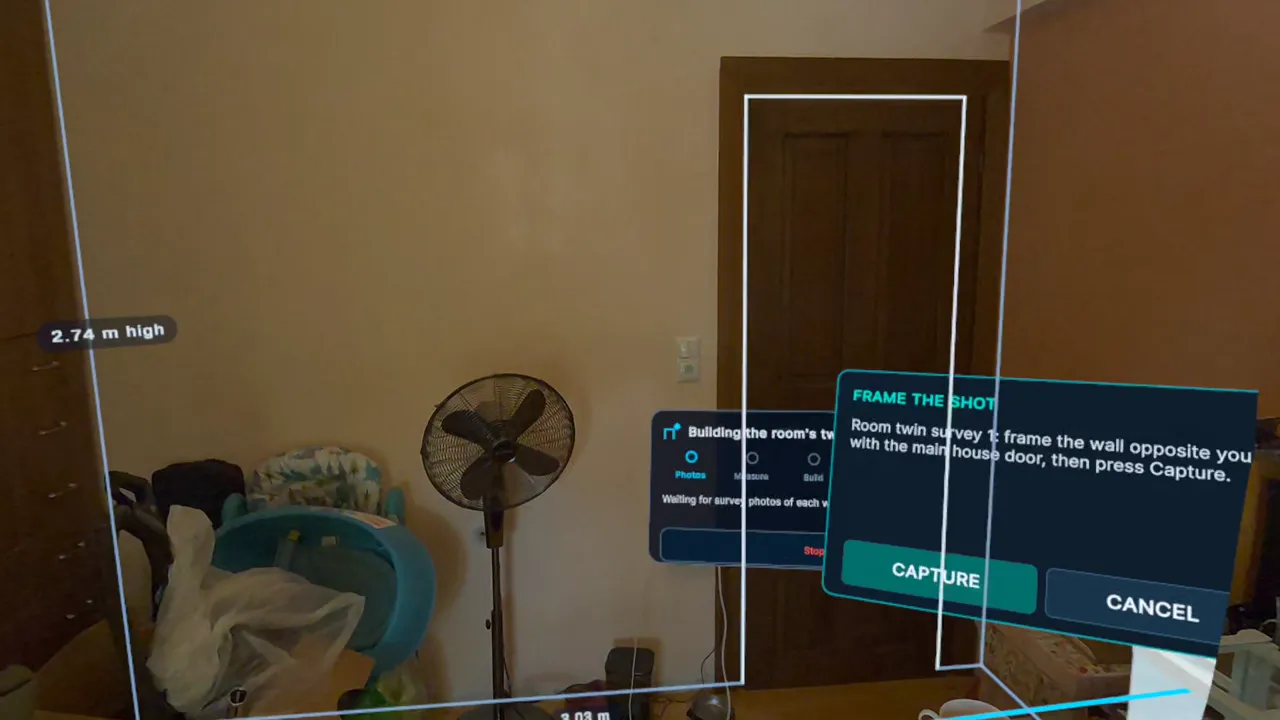
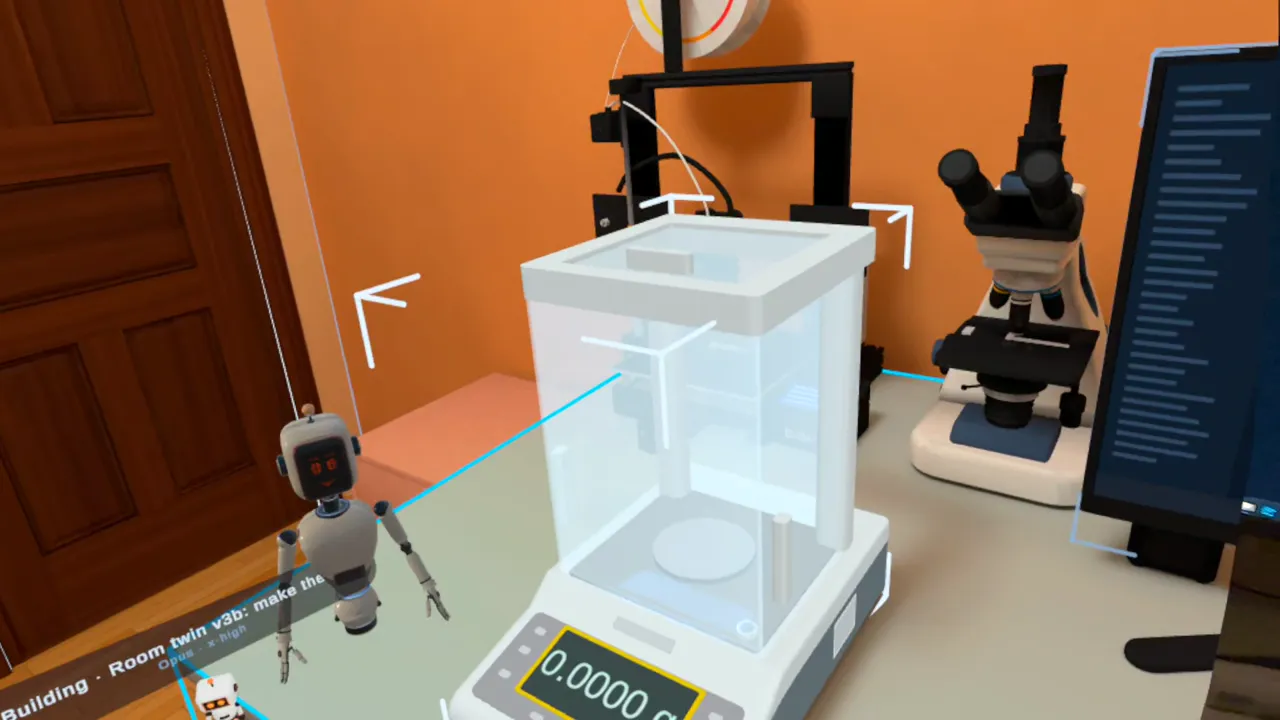
One spoken request, and Claude plans a digital twin of the room: walls and doors from the room’s measurements, photos for the look and the colours. It asks for each wall through a capture panel in the headset and says what it sees in every photo; white paper on the wall gives it a colour reference for the warm light. Builder agents then make the room in Blender, and the headset shows it over the real room.

Spatial AI, room twin: a digital twin of a real room, built by asking Claude
A capture panel for each wall
The balance’s doors and display work in the twin too

How it works

  1. 1AskOne spoken request. Claude plans the twin from the room’s measurements and asks for photos.
  2. 2PhotosA capture panel for each wall, and white paper on the wall as a colour reference.
  3. 3BuildBuilder agents model the room in Blender from an agreed list of 25 items, about 127,000 triangles.
  4. 4ShowThe twin switches on and off over the real room, and a visitor can join it as an avatar.

What the film shows

Cut from headset recordings made on 29 and 31 October 2026 on a Meta Quest 3, edited for length. The spoken requests were re-recorded for the film; Claude’s replies are as recorded. The twin shown is the evening build, and the side-by-side shots pair the headset’s camera with the twin at the same moment.

Alepou

Big Lab

Built by asking

Watch on YouTube

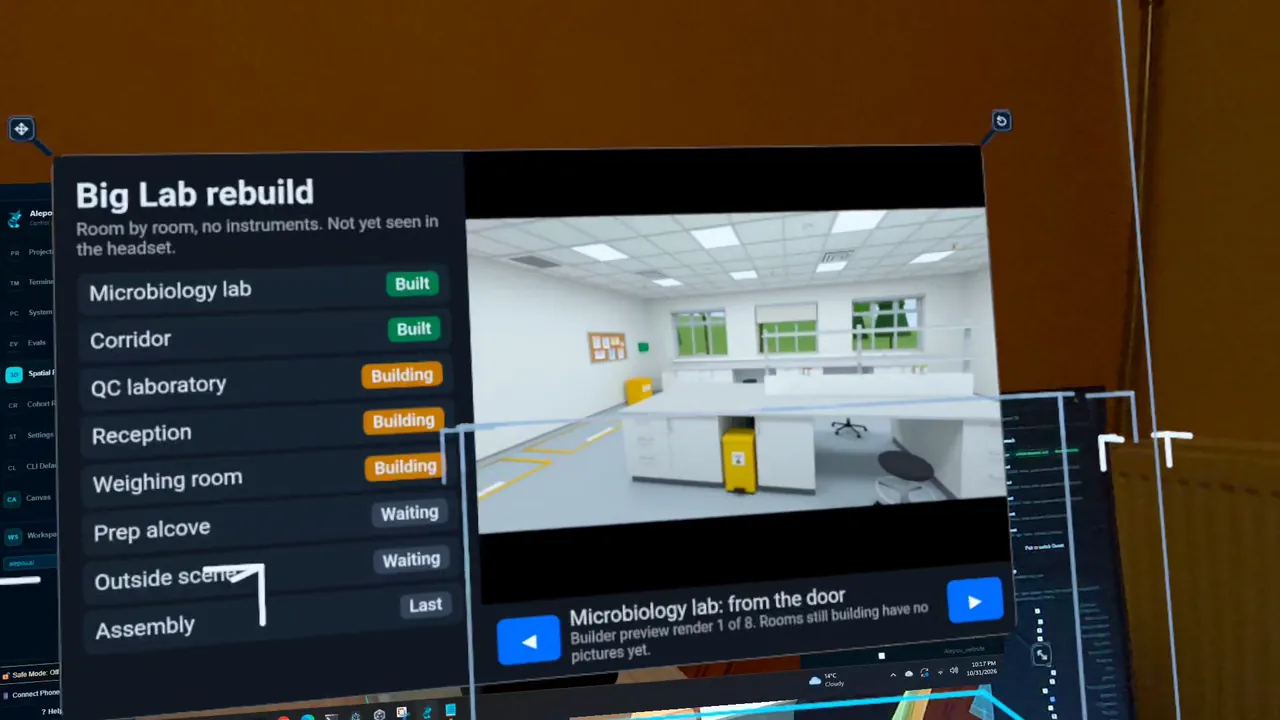
One spoken request for a big laboratory and a long list of instruments. The AI plans it and hands the work to specialist builders: a reception, a corridor, a weighing room, a QC lab, a microbiology lab and a sterilising alcove, then about thirty instrument models. Progress and renders arrive on panels in front of you, and you can walk in while the instruments are still going in.

Spatial AI, Big Lab: a walk-through laboratory built by talking
Progress and renders, room by room
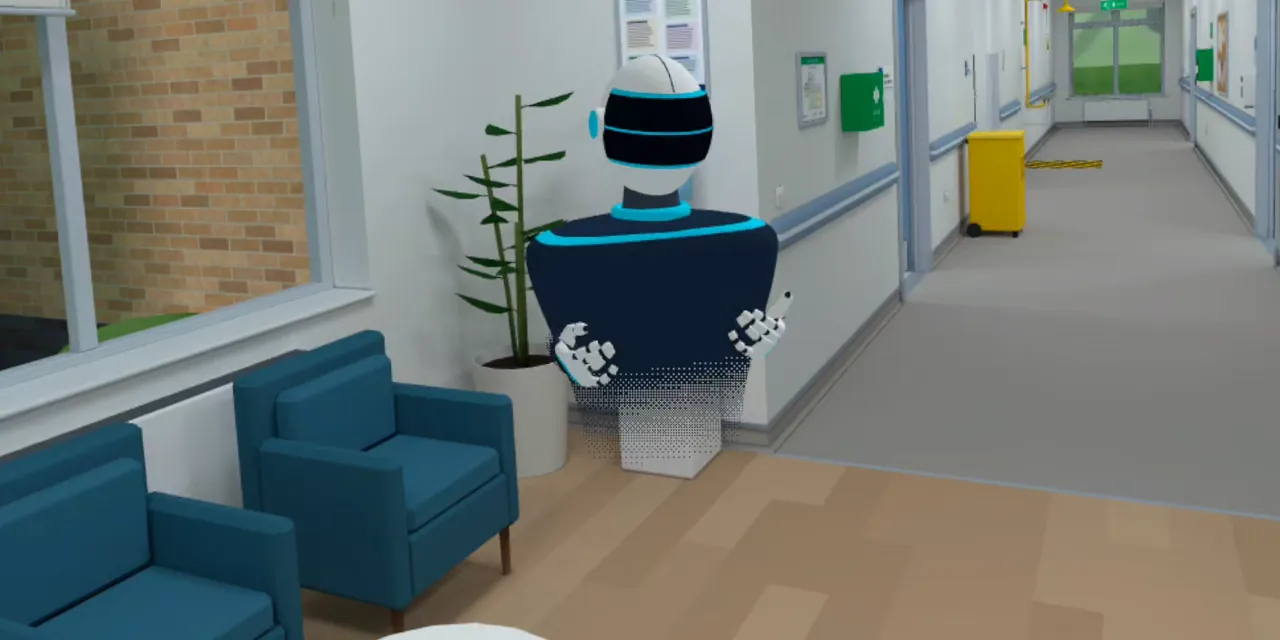
A visitor joins from their own wearable

How it works

  1. 1AskOne spoken request: a new laboratory, for a long list of instruments.
  2. 2BuildThe AI plans the work, and each build task goes to its own specialist builder.
  3. 3EnterStep inside while it’s going up. Each active builder shows as a small robot.
  4. 4ShareSomeone else joins from their own wearable as a visitor.

What the film shows

Cut from headset recordings made between 20 October and 4 November 2026, edited for length. The spoken request was re-recorded for the film; Claude’s line is as recorded, and the narration is a synthesised voice. Alepou isn’t tied to one AI: in this film it happens to be Claude, which also did the modelling. The frame-rate figure, about 54 to about 72 frames per second, was measured in reception.

Projects

Alepou

Universal client for wearables

alepou.ai

Ask for an app and an AI builds it, straight onto your headset. The headset runs one Alepou app that never changes; the AI, each app’s logic and the connections to real instruments run on your own computer.

Each demo here was made that way, on the same headset app. Underneath is Alepou’s workspace for long-running AI work, where every change is a task tied to a git commit, so the AI’s work stays inspectable.

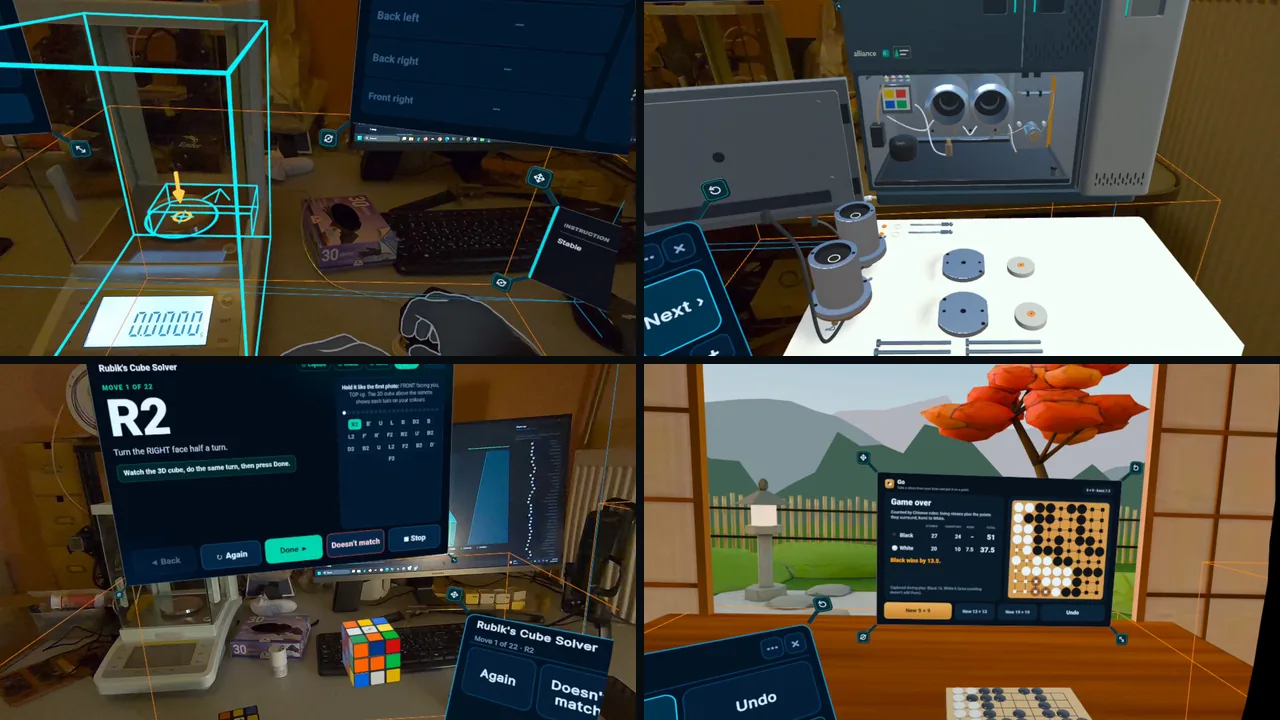
Spatial AI, just ask: four headset apps, built by asking Claude
How Alepou Spatial worksAnimation
Balance eccentricity testRecordedAbout this demo →
Life-science data agentsPublic demoAbout this demo →
Rubik’s cube solverRecordedAbout this demo →
Go against KataGoRecordedAbout this demo →
Digital twin of a roomRecordedAbout this demo →

How it works

HeadsetQuest 3 · one Alepou client app
  • Draws models, panels, pieces and worlds
  • Voice in and out
  • Hands, gaze and a remote
  • Camera photos on request
Your computerAlepou Desktop
  • The AI (Claude, also Codex), in sessions Alepou supervises
  • Writes each app as a folder of plain files
  • Runs each app’s logic: rules, scoring, steps
  • Perception: camera photos, object detection
  • Real instruments, such as a balance over serial
  • Blender and Unity, driven by the AI, for 3D assets
  • Speech, recording, audit trail
PhoneWatch and steer it all

Also built by asking

A Japanese tea room with a cat, and the Mushroom March puzzle diorama. An HPLC pump-service walkthrough is in progress. Nothing about any of them is built into the headset app.

Projects

Project Parallax

Early prototype · became Alepou

What it became

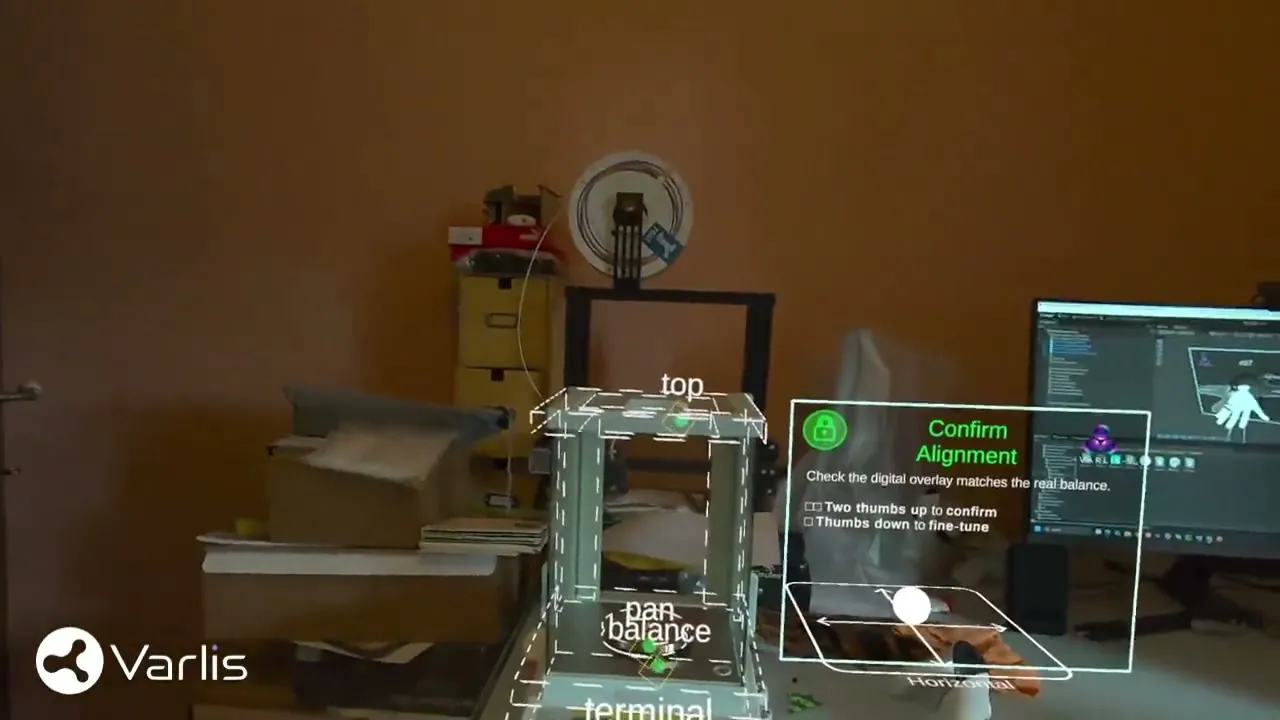
Early prototype work: mixed reality that recognised real laboratory equipment and guided the procedure around it. It ultimately became Alepou.

Mixed-reality overlay registered to an analytical balance on a workbench
Passthrough capture, early prototype on Quest 3
Projects

Varlis VR Training

B2B VR training

varlis.io/training

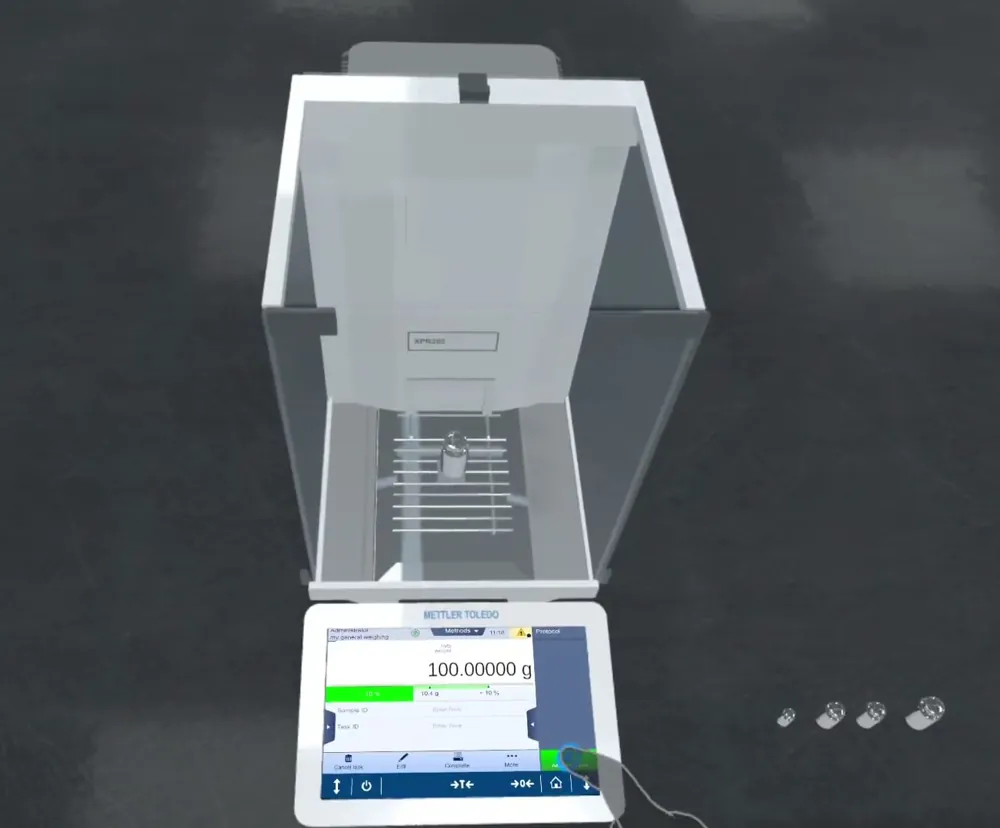
B2B VR training software for scientific instruments and laboratory procedures. The first enterprise proof of concept was built for a global instrument manufacturer.

Virtual analytical balance with its touchscreen showing a weighing result
In-headset capture, calibration demo
Projects

Savans

Applied AI

savans.ai

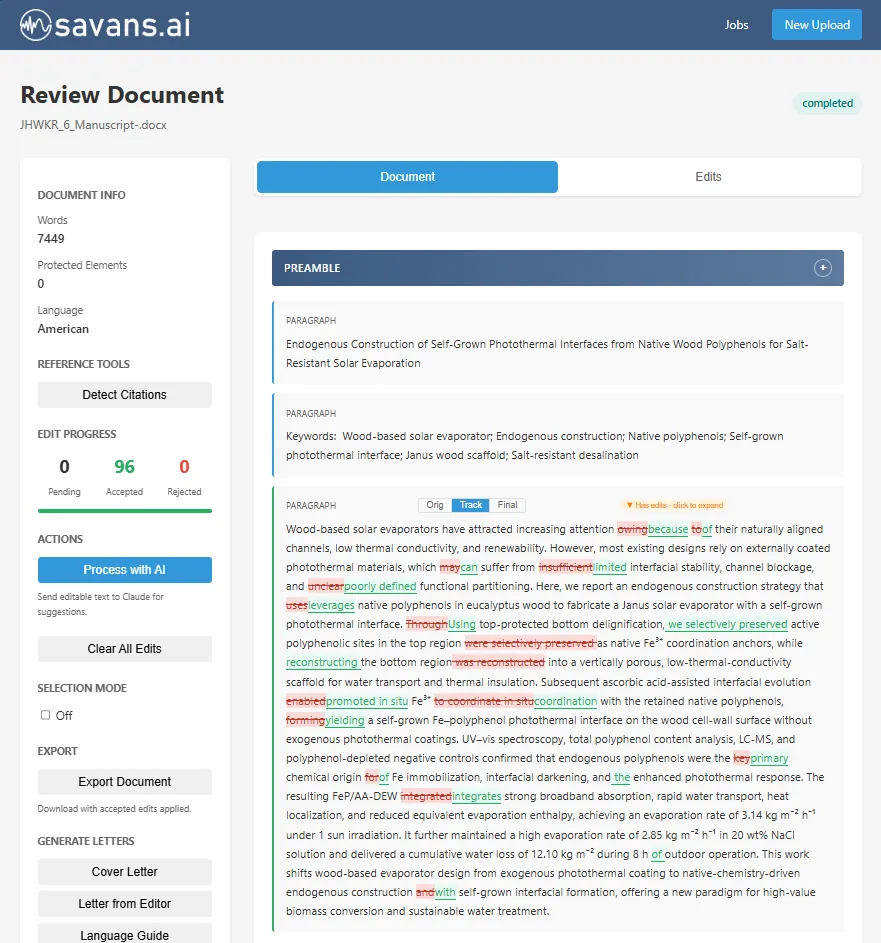
AI inside an editor’s existing Word and tracked-changes workflow, with a human reviewing every edit. Used in paid work.

Savans document review screen with suggested edits marked in the manuscript
Review screen
Projects

Spareleg

Side project · games

spareleg.com

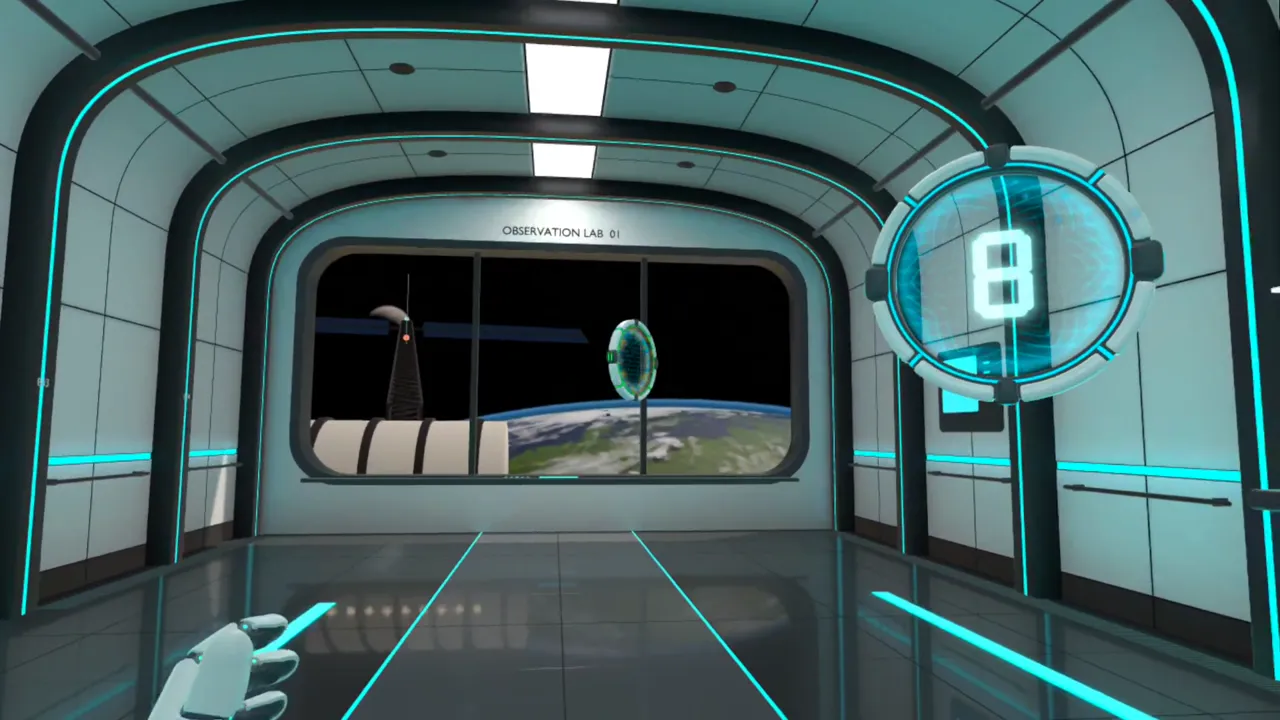
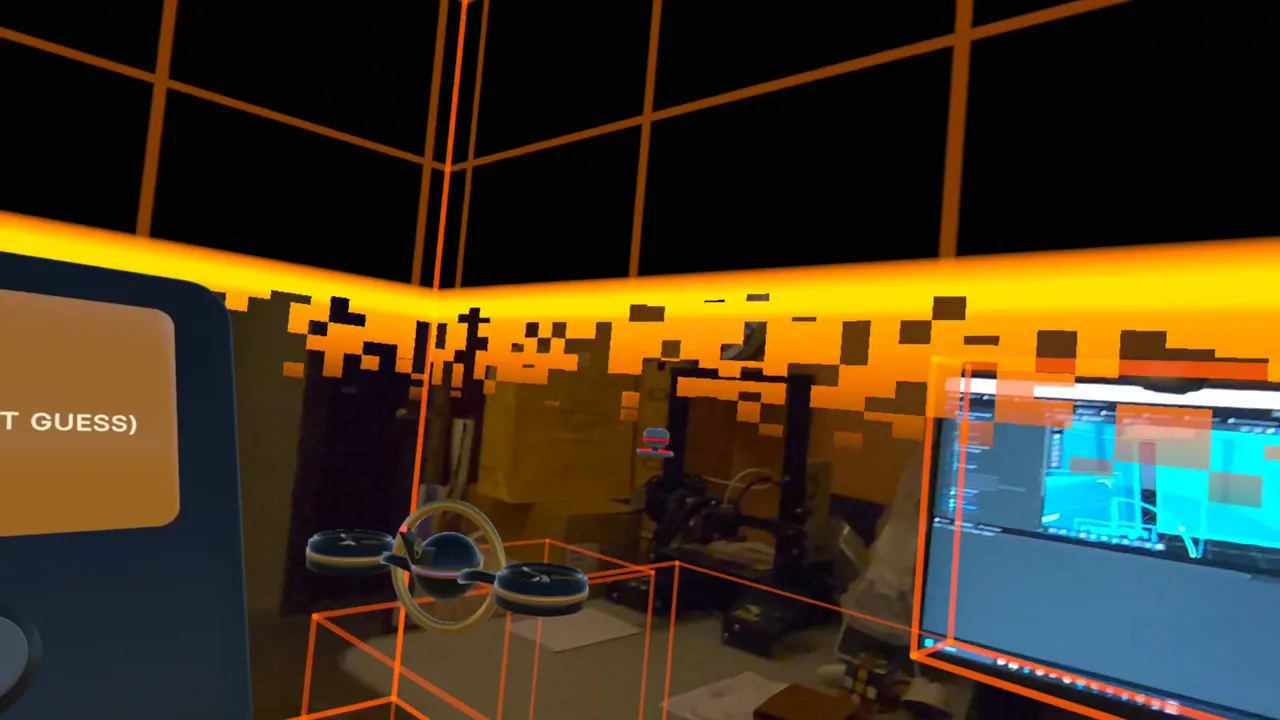
Paradise Orbital is a Meta Quest 3 game set in a grand hotel in low Earth orbit, where room service comes by drone. Fly the drone through rings in the station’s corridors against the clock. Then the holodeck turns your own room into the level: rings, lasers and spiked mines in mixed reality, and a robot host with opinions about your choice of surroundings.

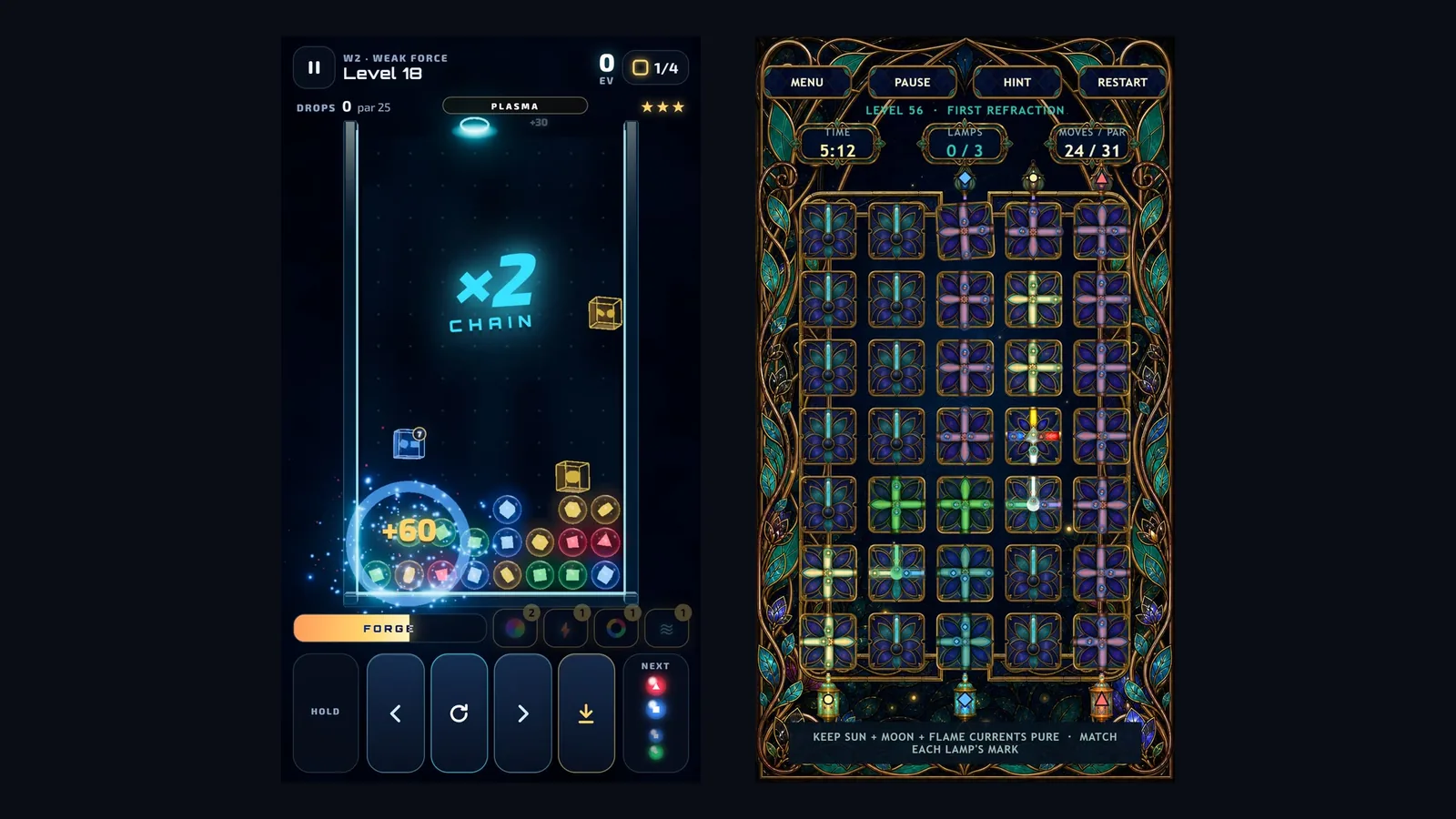
Spareleg also makes small science puzzle games. Quark Forge, a particle-physics colour puzzle, is out on Android; Firefly Relay is next.

Paradise Orbital: teaser, Meta Quest 3, VR and mixed reality
The holodeck gives way to the real room
The robot host has opinions
Gameplay screens from Quark Forge and Firefly Relay side by side
Quark Forge and Firefly Relay, in-game captures

Science

Chemistry is where I learned to work: form a hypothesis, design the experiment, measure honestly. Industry then taught me how instruments, methods and laboratories behave when real people depend on them.

Applied in industry
  • Pharmaceutical QC and production laboratories
  • LC, LC-MS/MS and high-resolution MS
  • Analytical method development
  • Laboratory design and commissioning
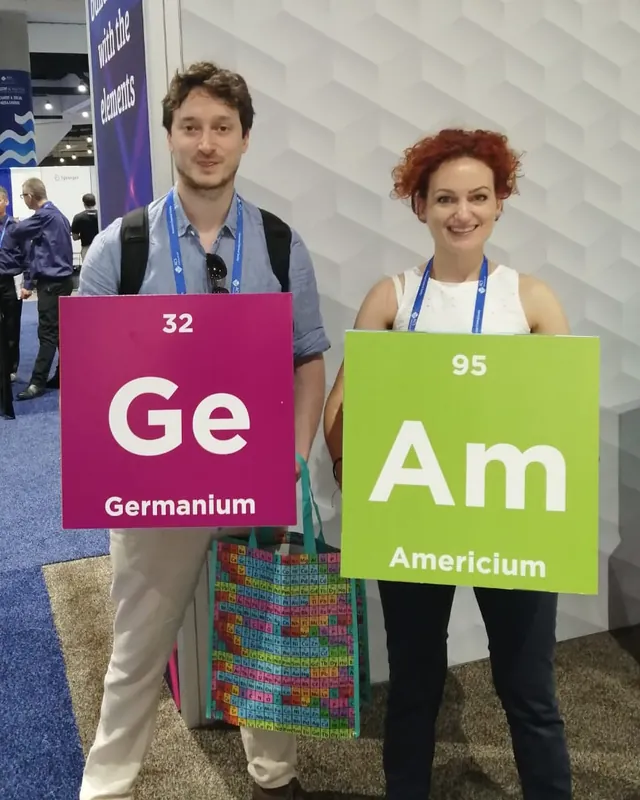
Guy Entract and a fellow chemist holding Germanium and Americium element boards at an American Chemical Society meeting
ACS National Meeting, 2019
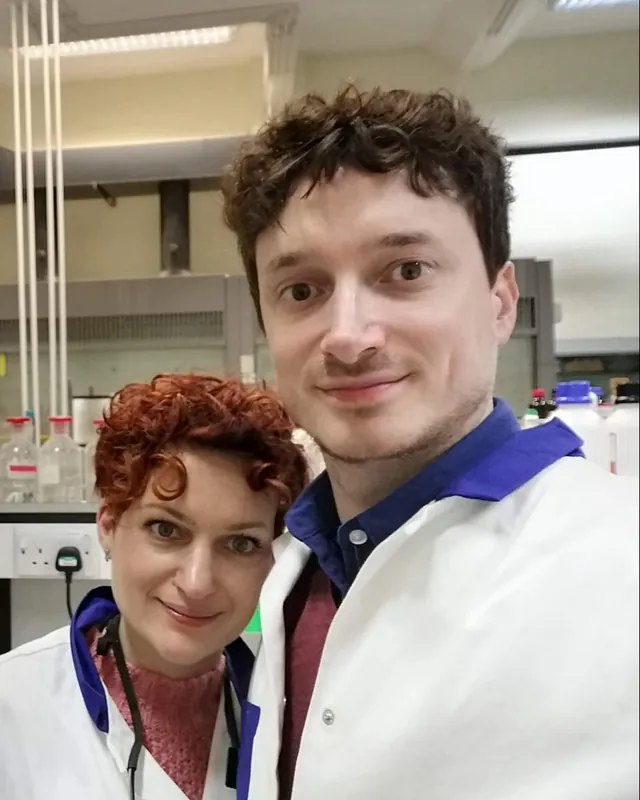
Guy Entract with a fellow chemist in a chemistry laboratory, fume hoods and reagent bottles behind them
In the lab, UK
Record5 entries
CodeEntryDetail
PhDPhD Chemistry, University of Hull, 2014–2019Molecular theranostics, photodynamic therapy, biological and organic chemistry.
PUBFirst-author paper, Molecular PharmaceuticsPeer-reviewed journal article from the PhD.
ACS ×2Two American Chemical Society National Meeting talksPresented doctoral research in San Diego and San Francisco.
PAT ×3Named inventor on three patent familiesSporopollenin microencapsulation: WO2022200762A1, WO2022180405A1, US20240139335A1.
EOFPharmacopoeial analytical methodDeveloped for a pharmaceutical manufacturer; accepted by Greece’s National Organization for Medicines.

About

I trained as a chemist at Hull, then spent a year and a half turning university research into patented products at a spinout. In 2020 we moved to Greece, and for three years I worked inside other people’s laboratories: installing and qualifying instruments, designing three pharmaceutical facilities from empty rooms and a mobile fuel laboratory inside a truck, and training the people who would run them.

That is where I learned what scientists need from technology, and how rarely software is built around it. Since 2024 I have been building it myself: AI agents that can be trusted with real work, and spatial software that sits beside real instruments.

Experience4

2024 – present

Varlis / Alepou

Founder & AI Product Builder

Thessaloniki, Greece / international

  • Own technical product work from open-ended problem and workflow discovery through solution definition, rapid build, evaluation, live demonstration, user feedback and iteration.
  • Built Alepou, a working agent-control environment with persistent context, governed tool use, structured tasks, recovery and audit; designed evaluation and acceptance tests and changed the product when evidence showed weaknesses.
  • Built a general-purpose wearable spatial runtime connected to Alepou and demonstrated it publicly with a commercial provider’s life-science tools: spoken requests become data queries, patent analysis, charts and 3D molecular views.
  • Built Savans around a real professional workflow and deployed it in paid work, keeping the user’s Word process and human review while materially increasing throughput.
  • Delivered a VR training proof of concept for a global instrument manufacturer, and Project Parallax, a mixed-reality system for guided workflows around real scientific equipment.

Sep 2021 – Nov 2024

Hellamco S.A. Scientific Instruments

Senior Applications & Support Specialist

Greece · universities, industrial laboratories, pharmaceutical manufacturing and QC

  • Worked directly with scientists, laboratory managers and operators, often on site, to uncover pain points and translate them into practical technical solutions.
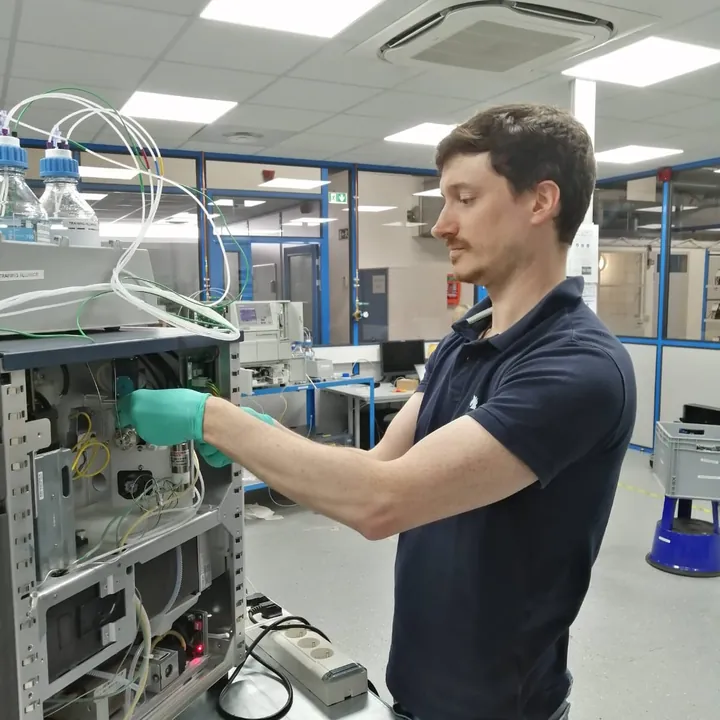
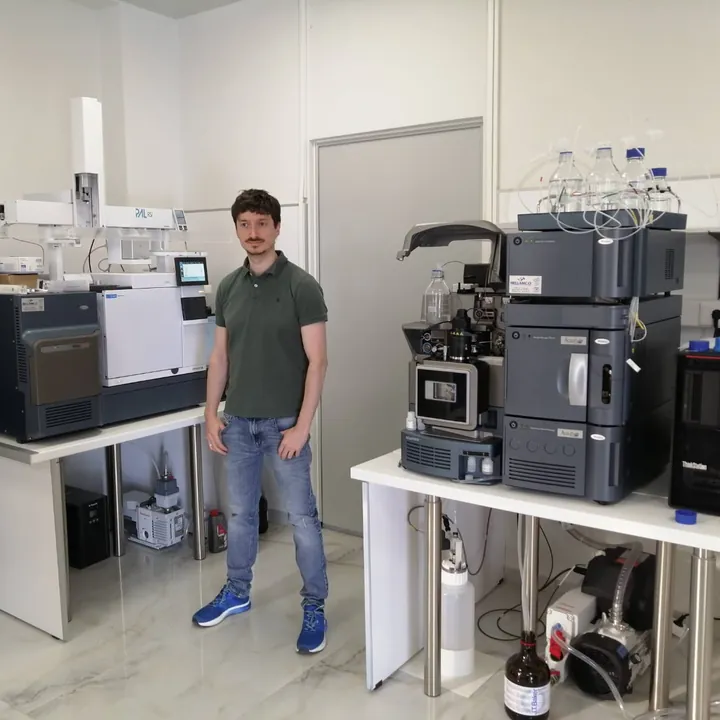
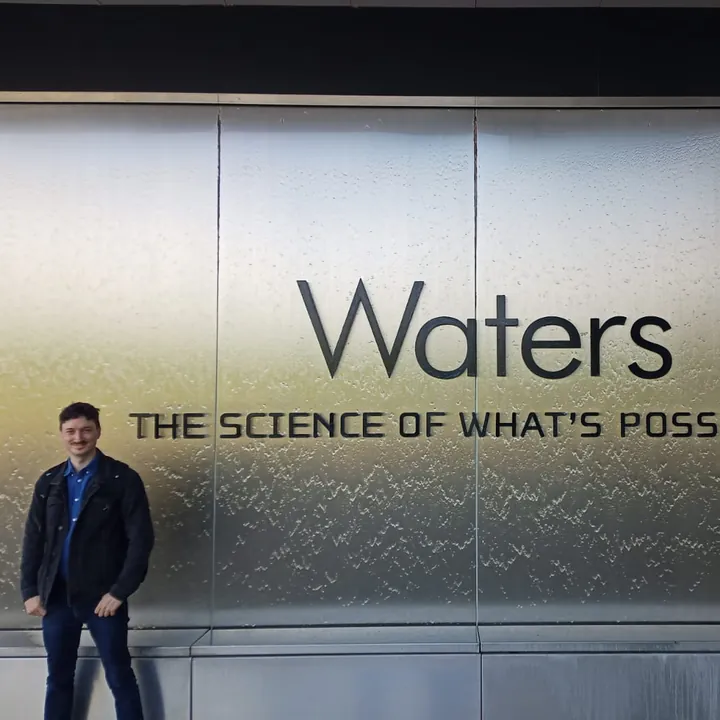
  • Applications specialist and service engineer at once, with about 30 weeks of manufacturer training from Waters, Mettler Toledo and Malvern Panalytical. Covered LC-MS and high-resolution MS, XRF/XRD, particle sizing, zeta potential and precision balances, and their software: method development, installation, troubleshooting and training.
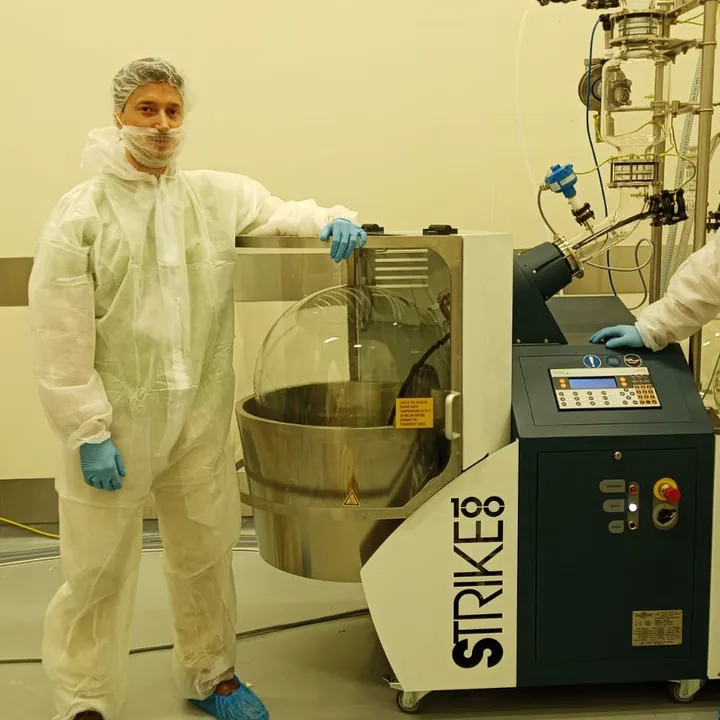
  • Project-managed three new pharmaceutical facilities end to end as the lead contact, across QC laboratories and production areas: designed the labs down to power and water outlets, custom-designed the furniture, installed every instrument and ran IQ/OQ, then trained the staff.
  • Later brought back by a client as a consultant to develop a pharmacopoeial method accepted by Greece’s National Organization for Medicines (EOF).
  • Designed a mobile fuel-testing laboratory for a national laboratory, for spot checks on diesel at the pump: custom furniture built to fit a Mercedes truck, and equipment chosen to meet the ASTM methods.
  • Brought into complex sales and discovery meetings when scientific depth was needed; became authorised to lead technical sales in mining and trained sales colleagues on XRF and XRD.
  • Designed training for everyone from individual scientists to whole laboratory teams and internal sales staff, including lab-ready quick-reference guides.

Sep 2019 – Feb 2021

Sporomex Limited

Project Manager

United Kingdom · university spinout · sporopollenin microencapsulation

  • Designed and managed research-to-product projects, coordinating experiments and delivery across internal teams and academic, government and industry partners, working directly with the founder.
  • Developed new processes and applications contributing to three patent families as a named inventor.
  • Turned open scientific questions into structured programmes, balancing what the science could show with what the business needed next.

2014 – 2019

University of Hull

Doctoral researcher, PhD Chemistry

Hull, United Kingdom · before that, MChem Chemistry (2:1), 2009–2014

  • Self-directed research across porphyrin chemistry, PET/PDT theranostics and radiochemistry, including work with hospital radiotherapy physics on clinical irradiation equipment.
  • First-author paper in Molecular Pharmaceutics, talks at two American Chemical Society National Meetings and a poster at the Houses of Parliament.
  • Supervised MSc research projects every year and taught undergraduates weekly.